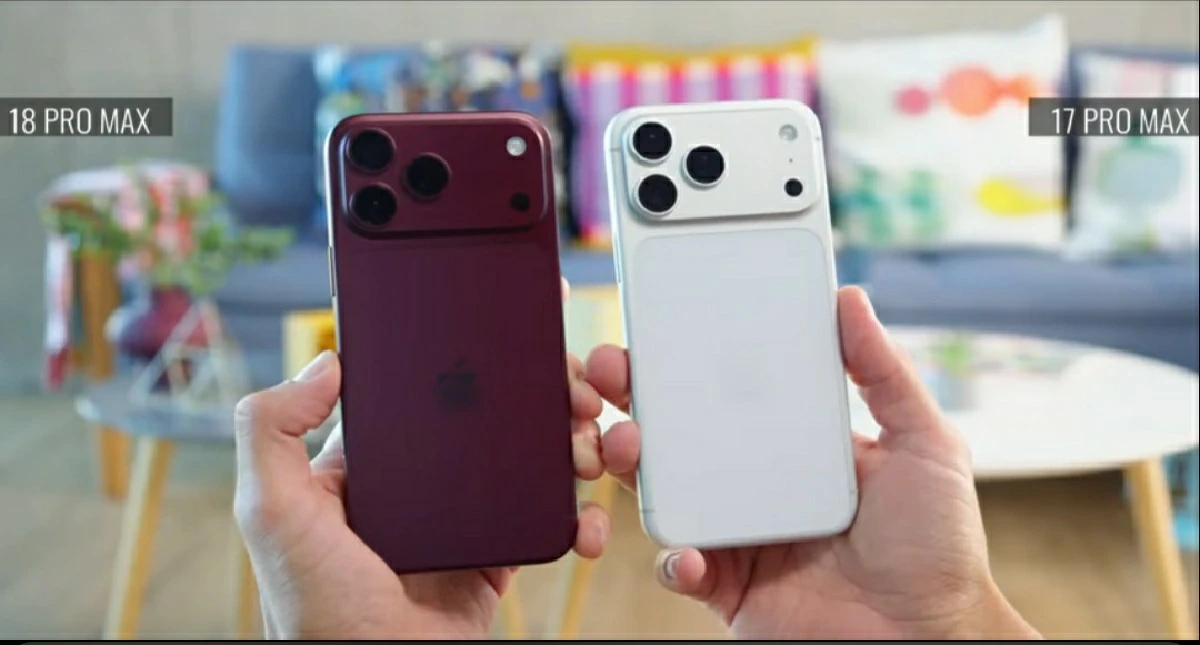
The Apple iPhone 18 Pro Max builds on the foundation of the iPhone 17 Pro Max with improvements to processing power, battery capacity, charging speed, camera controls and thermal management. However, despite being a newer flagship, it does not introduce a completely different design or a major change to the overall smartphone experience. Both devices retain the same large 6.9-inch display, a similar triple 48MP camera system and Apple’s premium build quality.
The most noticeable differences are found beneath the surface. The iPhone 18 Pro Max features the newer Apple A20 Pro chipset, a larger battery, faster wired charging and a redesigned front camera arrangement that makes the display cutout smaller. Its main camera also gains a brighter variable-aperture lens, giving you additional control over how photos are captured.
However, the iPhone 17 Pro Max remains a powerful flagship in its own right. Its A19 Pro processor, excellent display, capable camera system and impressive battery endurance mean that it still offers much of what makes Apple’s Pro Max smartphones appealing.
So, how much better is the iPhone 18 Pro Max, and should you spend more money on it when the iPhone 17 Pro Max is still available at a lower price? Let’s take a closer look at their differences.
Design and Build Quality
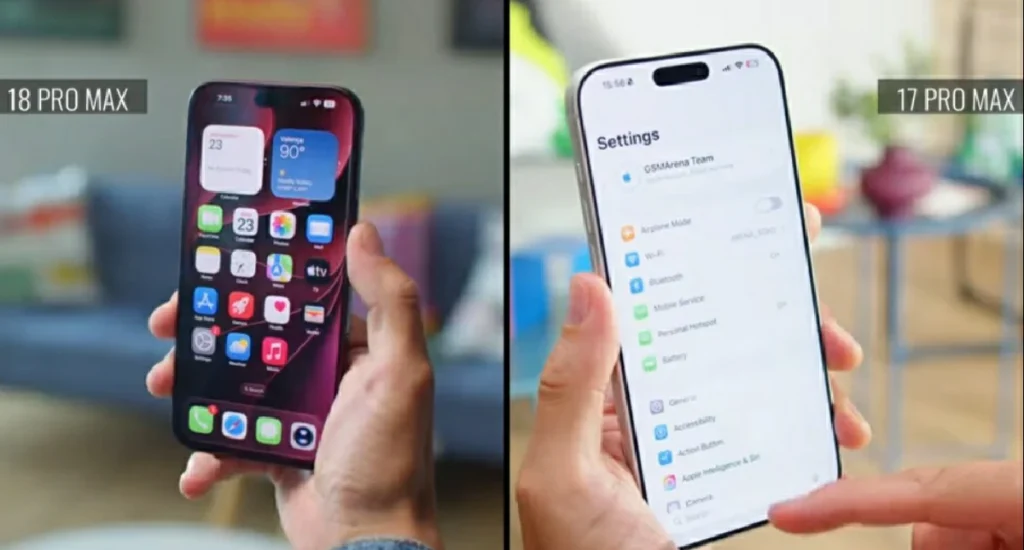
The Apple iPhone 18 Pro Max and iPhone 17 Pro Max share almost identical designs. Both smartphones retain the same overall dimensions, measuring 163.4 x 78 x 8.8 mm, and feature a familiar premium construction with a glass front, aluminium frame and glass rear.
Apple has maintained the design introduced with the previous generation rather than giving the iPhone 18 Pro Max a completely new appearance. Consequently, distinguishing these two smartphones from the front or back can be difficult unless you pay attention to their colour options and minor design details.
Both devices feature Ceramic Shield 2 protection on the front, providing additional resistance against everyday scratches and accidental damage. They also carry an IP68 rating for dust and water resistance, meaning they can withstand immersion in water up to 6 metres for approximately 30 minutes under controlled conditions.
One noticeable difference is their weight. The iPhone 17 Pro Max weighs 233g, while the iPhone 18 Pro Max comes in at 249g. That is a 16g increase, making the newer model slightly heavier despite retaining the same physical dimensions.
The additional weight is associated with the larger battery and upgraded internal cooling hardware. Although the difference may not seem particularly significant on paper, you may notice it when holding either phone for extended periods.
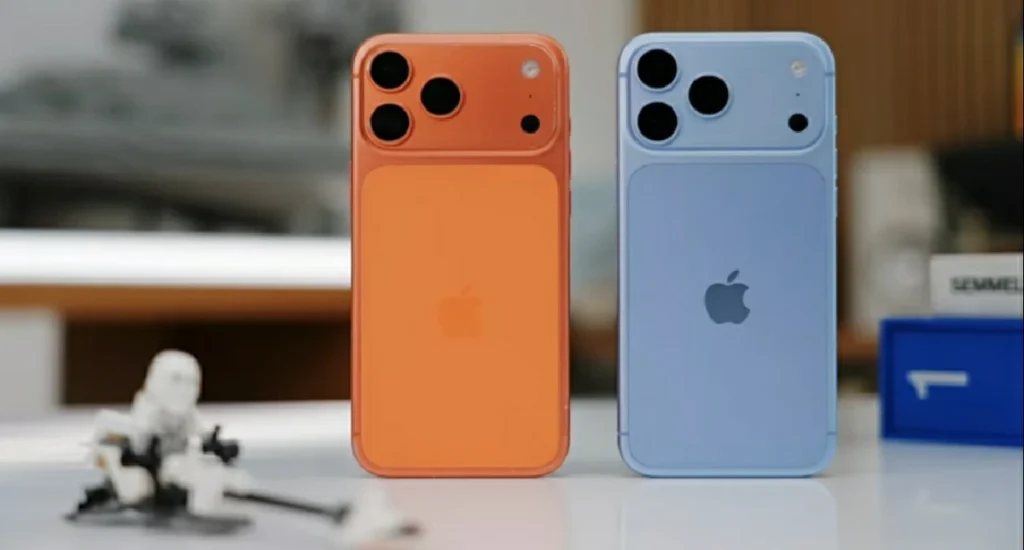
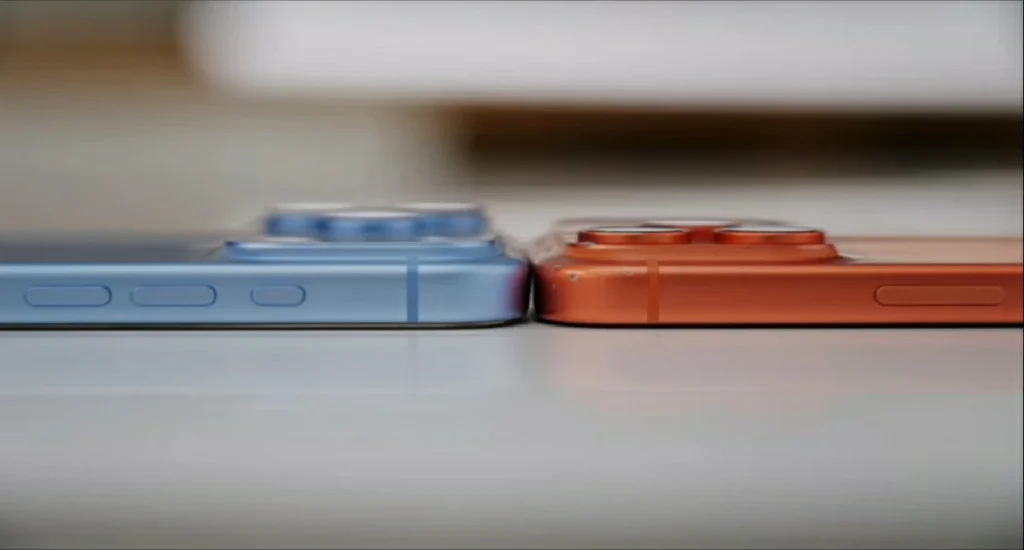
The iPhone 18 Pro Max is available in Black, Silver, Glacier and Burgundy, while the iPhone 17 Pro Max comes in Silver, Cosmic Orange and Deep Blue.
Overall, both smartphones offer the same premium construction and water resistance. However, if you prefer a slightly lighter device, the iPhone 17 Pro Max has an advantage.
Display Quality and Screen Features
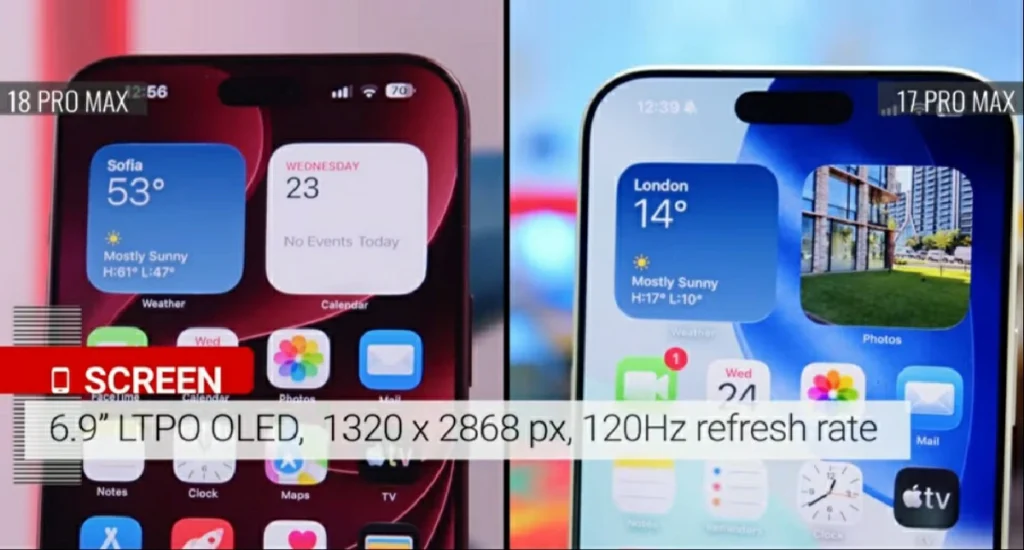
Apple has retained the same display specifications on both smartphones, so there is no major difference in overall screen quality.
Both the iPhone 18 Pro Max and iPhone 17 Pro Max feature a 6.9-inch LTPO Super Retina XDR OLED display with a resolution of 1320 x 2868 pixels. This works out to approximately 460 pixels per inch, providing excellent sharpness for reading, watching videos, viewing photographs and browsing the internet.
The LTPO technology allows the display to adjust its refresh rate depending on the content being displayed. Both smartphones support refresh rates of up to 120Hz, making scrolling, animations and supported games look smoother than they would on a conventional 60Hz display.
You also get HDR10 and Dolby Vision support on both devices, which helps deliver more detailed highlights, richer colours and improved contrast when watching compatible content.
Brightness is another area where the two smartphones are closely matched. Both displays offer a typical brightness of 1,000 nits, up to 1,600 nits in high-brightness mode and a peak brightness of 3,000 nits.
This makes either device suitable for outdoor use, including situations where sunlight would normally make smartphone screens difficult to read.
Apple has also included an anti-reflective coating on both displays. This helps reduce reflections and glare, improving visibility when using the phone outdoors or under bright indoor lighting.
However, there is one important display-related improvement on the iPhone 18 Pro Max. Apple has moved the infrared camera used by Face ID underneath the display. As a result, the newer model has a smaller front-facing camera cutout, giving you slightly more usable screen space.
Importantly, this change does not compromise Face ID functionality. Facial recognition continues to work as expected, so you still get the convenience of unlocking your phone securely with your face.
The iPhone 17 Pro Max retains the older front camera arrangement, but its display is otherwise just as capable.
Both smartphones deliver excellent OLED display quality, sharp resolution, smooth 120Hz refresh rates and strong outdoor visibility. Therefore, if display quality is your main consideration, upgrading from the iPhone 17 Pro Max to the iPhone 18 Pro Max will not make a substantial difference.
Performance and Gaming
Performance is one of the major areas where the iPhone 18 Pro Max improves over its predecessor.
The newer model is powered by Apple’s A20 Pro chipset, manufactured using a 2nm process, while the iPhone 17 Pro Max uses the A19 Pro chipset built on a 3nm process.
Both processors are designed for demanding smartphone applications, but the A20 Pro introduces a noticeable generational improvement in processing capabilities.
The A20 Pro features a hexa-core CPU consisting of two performance cores running at up to 4.93GHz and four efficiency cores running at up to 2.64GHz. It is paired with a 7-core Apple GPU for graphics processing.
In comparison, the A19 Pro inside the iPhone 17 Pro Max features two performance cores running at up to 4.26GHz and four efficiency cores running at up to 2.60GHz, alongside a 6-core Apple GPU.
Both smartphones come with 12GB of RAM, providing sufficient memory for multitasking, demanding applications and keeping several applications running in the background.
In benchmark comparisons, the iPhone 18 Pro Max delivers considerably higher CPU and graphics performance than the iPhone 17 Pro Max. This gives the newer model an advantage when handling processor-intensive applications, advanced graphics, video editing and demanding games.
If you regularly play graphically intensive games or work with applications that require substantial processing power, the A20 Pro provides additional performance headroom.
However, the A19 Pro is still an extremely capable flagship processor. The iPhone 17 Pro Max handles demanding applications and modern mobile games comfortably, so you are unlikely to find it underpowered for ordinary smartphone activities.
Thermal Management and Sustained Performance
Apple has also equipped the iPhone 18 Pro Max with an upgraded cooling system featuring a larger vapour chamber. This is intended to manage heat generated during demanding activities and help maintain performance during extended workloads.
However, the improvements do not translate into a significant advantage in sustained performance over the previous generation.
Both smartphones perform similarly in thermal management comparisons, maintaining respectable performance under demanding conditions.
This means that although the iPhone 18 Pro Max has a more powerful processor and improved cooling hardware, you should not expect a dramatic difference in sustained gaming performance.
The iPhone 18 Pro Max is undoubtedly the more powerful smartphone, but the iPhone 17 Pro Max remains more than capable of handling practically anything you would expect from a premium flagship.
Software and User Experience
The iPhone 18 Pro Max runs iOS 27 out of the box, while the iPhone 17 Pro Max originally launched with iOS 26. However, the older model is also compatible with iOS 27, meaning both smartphones offer essentially the same software experience.
This is important because buying the newer iPhone does not necessarily mean getting an entirely different operating system or a completely redesigned user interface.
Both devices provide access to Apple’s familiar iOS environment, including its application ecosystem, privacy features, security controls and system-wide software functionality.
You also get the same general experience when navigating the interface, managing applications, taking advantage of Apple’s services and using compatible accessories.
The newer iPhone has a more powerful chipset, which provides additional processing headroom for demanding software features. Nevertheless, the iPhone 17 Pro Max remains sufficiently powerful to deliver a smooth experience.
If you already own the iPhone 17 Pro Max, the software experience alone is not a compelling reason to upgrade.
Camera Specifications and Features
Apple has retained a very similar camera arrangement on the iPhone 18 Pro Max, but there are some meaningful improvements, particularly with the main camera.
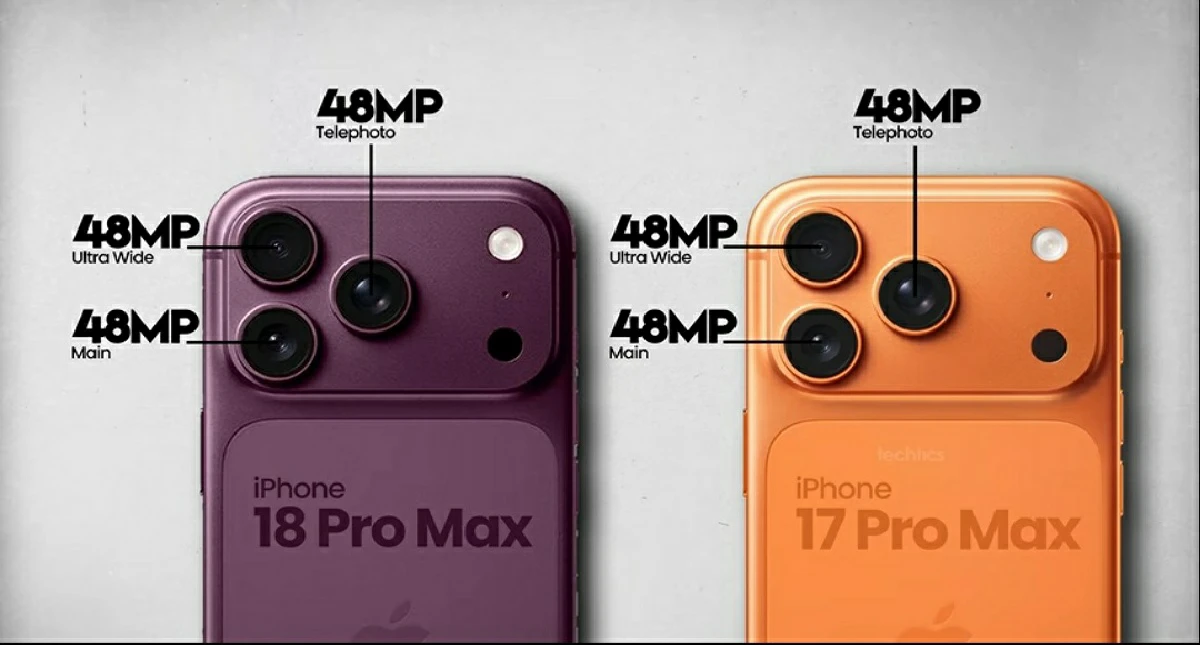
Both smartphones feature a triple-camera system consisting of a 48MP primary camera, a 48MP periscope telephoto camera and a 48MP ultrawide camera. They also include a LiDAR scanner for depth sensing.
The biggest hardware difference is found in the main camera, where the iPhone 18 Pro Max introduces a brighter lens with variable aperture.
The newer model also provides additional manual camera controls, giving you more flexibility when capturing photographs.
Main Camera
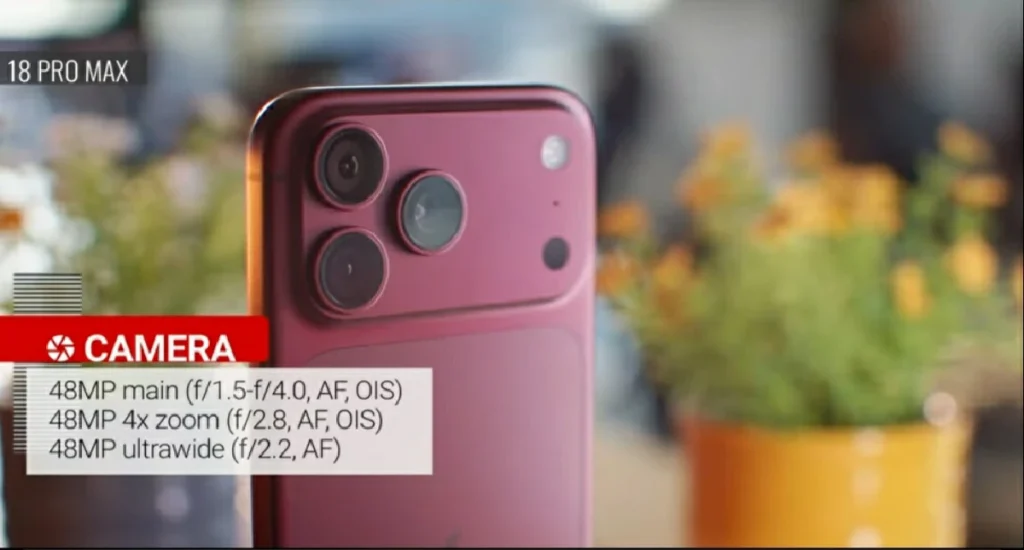
The iPhone 18 Pro Max features a 48MP primary camera with an f/1.5-f/4.0 variable aperture, a 24mm equivalent focal length and a 1/1.28-inch sensor.
It also includes dual-pixel phase-detection autofocus and second-generation sensor-shift optical image stabilisation.
In comparison, the iPhone 17 Pro Max uses a 48MP main camera with a fixed f/1.8 aperture. It has the same 24mm equivalent focal length and 1/1.28-inch sensor size, alongside dual-pixel autofocus and sensor-shift optical image stabilisation.
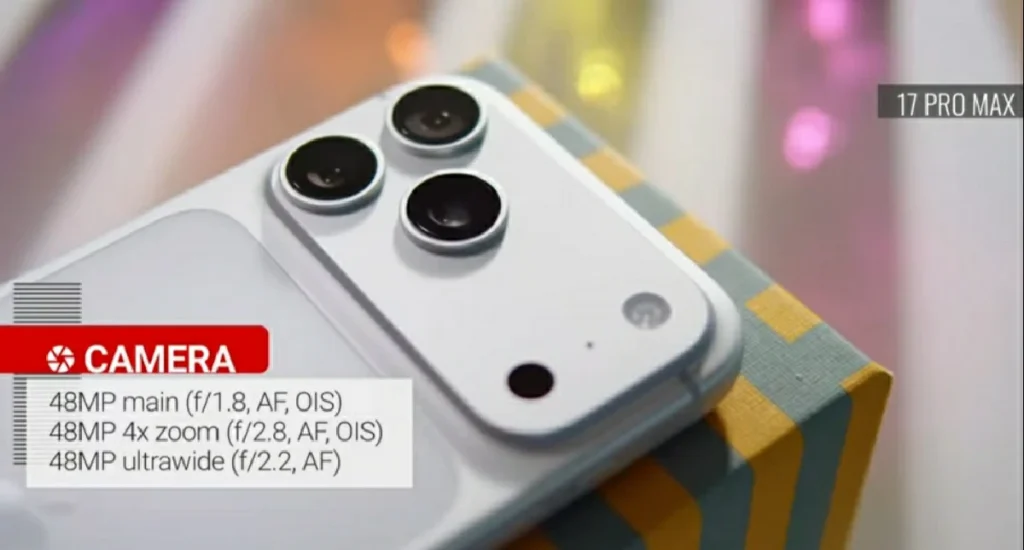
The brighter f/1.5 setting on the newer model allows more light to reach the sensor when required, potentially helping with photography in challenging lighting conditions.
However, the variable aperture is not only about light capture. It also allows you to adjust the depth of field, giving you additional control over how much of the background appears in focus.
This can be useful when photographing nearby objects or subjects, although the difference in background separation is more noticeable in close-up photography because smartphone camera sensors are relatively small.
Interestingly, the wider aperture does not automatically translate into substantially sharper or better-looking photographs. Comparisons show that the difference in image sharpness and overall quality between the two main cameras is relatively small, regardless of lighting conditions.
In daylight, both smartphones produce very similar photographs. The iPhone 18 Pro Max tends to deliver slightly warmer colours and can capture somewhat better-defined details in certain scenes.
At 2x digital zoom, the newer model can also produce slightly sharper results in some situations.
Another important addition is the ability to manually adjust shutter speed and white balance on the iPhone 18 Pro Max. These controls were not available in the same way on the iPhone 17 Pro Max, making the newer model more flexible if you prefer taking greater control over your photography.
Overall, the main camera improvement is useful, but it is not a dramatic generational leap in everyday photo quality.
Periscope Telephoto Camera and Zoom Performance
Both smartphones feature a 48MP periscope telephoto camera with a 100mm equivalent focal length, f/2.8 aperture and 4x optical zoom.
The telephoto cameras also support phase-detection autofocus and 3D sensor-shift optical image stabilisation, helping reduce blur when capturing distant subjects.
Because the hardware is essentially identical, the differences in their zoom photography are relatively minor.
At 4x zoom, photographs from the iPhone 18 Pro Max generally appear slightly warmer than those from the iPhone 17 Pro Max. However, there is no particularly significant improvement in sharpness or detail.
The same applies at 8x zoom, where the two smartphones produce broadly similar results.
Therefore, if you frequently photograph distant subjects, the iPhone 18 Pro Max does not introduce a major improvement in telephoto image quality over the previous generation.
Both devices provide a capable 4x optical zoom system, making them suitable for portraits, distant subjects and other situations where the main camera would not provide the desired framing.
Ultrawide Camera
The ultrawide camera is another area where Apple has maintained the same hardware.
Both the iPhone 18 Pro Max and iPhone 17 Pro Max feature a 48MP ultrawide camera with an f/2.2 aperture, 13mm equivalent focal length and a 120-degree field of view.
This camera is particularly useful when photographing landscapes, architecture, group photographs and other scenes where you need to capture more of the surroundings.
In daylight, the two smartphones produce very similar ultrawide photographs. The main difference is the slightly warmer colour reproduction from the newer model.
Beyond that, there is little to separate them in terms of overall image quality.
At night, both ultrawide cameras struggle more noticeably. Photographs can appear soft, noisy and relatively dark, with limited detail in challenging lighting conditions.
Consequently, the ultrawide camera does not provide a compelling reason to upgrade from the iPhone 17 Pro Max.
Night Photography
Although the iPhone 18 Pro Max has a brighter main camera lens, the improvements in night photography are not particularly impressive.
The wider f/1.5 aperture gives the newer model an advantage on paper because it can allow more light into the camera sensor. However, the difference in actual night photographs is relatively small.
Both smartphones capture broadly similar images in low-light conditions, with no substantial improvement in overall sharpness or detail from the newer model.
The telephoto cameras also struggle at night. Images captured using the 4x zoom can look grainy and lack sharpness on both devices.
The ultrawide cameras produce similarly disappointing results in challenging lighting, with photographs appearing soft, noisy and somewhat gloomy.
This means that although the iPhone 18 Pro Max introduces a brighter main camera lens, you should not expect a major improvement in night photography compared with the iPhone 17 Pro Max.
Front Camera and Selfies
Apple has retained the same selfie camera hardware on both smartphones.
Each device features an 18MP multi-aspect front-facing camera with an f/1.9 aperture, a 20mm equivalent ultrawide focal length and phase-detection autofocus.
The front camera also works alongside Apple’s SL 3D sensor for facial recognition and depth-related functions.
Since the hardware has not changed, selfie quality is essentially the same on both devices.
You can expect similar results when capturing individual selfies, group photographs and other front-camera images.
Both smartphones also support HDR and Dolby Vision HDR features for compatible selfie video recording.
The smaller front-facing camera cutout on the iPhone 18 Pro Max is a display design improvement rather than a major camera hardware upgrade.
Video Recording Capabilities
Video recording is another area where the two smartphones are remarkably similar.
Both devices support 4K video recording at 24, 25, 30, 60, 100 and 120 frames per second. They also support 1080p recording at 25, 30, 60, 120 and 240 frames per second.
Additional video capabilities include 10-bit HDR, Dolby Vision HDR recording at up to 120fps, Apple ProRes, ProRes RAW and Apple Log 2.
Both smartphones also support spatial video and audio recording, alongside stereo sound recording.
When recording during the day, the resulting footage from both devices is extremely similar. There is no substantial difference in overall video quality, detail or consistency.
Nighttime video recording also produces closely matched results, making it difficult to identify a meaningful advantage for either smartphone.
The front cameras are similarly matched, with both supporting 4K recording at up to 60fps and 1080p recording at up to 120fps. Gyro-based electronic image stabilisation is also available.
Overall, both smartphones provide excellent video recording flexibility, including advanced formats suitable for more demanding video workflows. However, the iPhone 18 Pro Max does not deliver a significant improvement in everyday video quality.
Battery Capacity and Battery Life
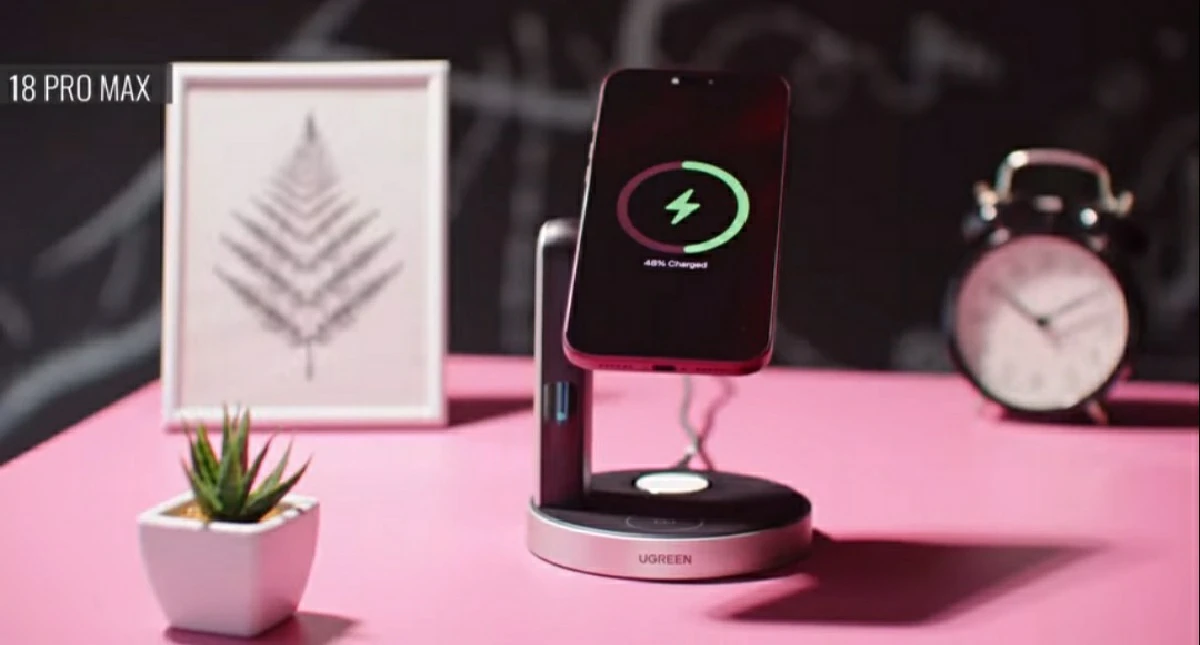
Battery life is one of the more important improvements Apple has introduced with the iPhone 18 Pro Max.
The iPhone 18 Pro Max comes with a 5,391mAh battery in its nano-SIM version, compared with the 4,823mAh battery in the nano-SIM version of the iPhone 17 Pro Max.
This gives the newer model an additional 568mAh of battery capacity.
There are also eSIM-only versions with larger batteries. The iPhone 18 Pro Max has a 5,567mAh battery in this configuration, while the iPhone 17 Pro Max comes with a 5,088mAh battery.
The larger battery, combined with the newer A20 Pro chipset, contributes to improved battery endurance.
Battery comparisons show that the iPhone 18 Pro Max lasts longer overall, although the difference is not particularly massive.
The most noticeable improvements appear in calling and web browsing endurance, where the newer model delivers better results.
However, the iPhone 17 Pro Max already offers impressive battery life, so it remains a dependable option if you need a flagship smartphone capable of lasting through demanding daily activities.
The iPhone 18 Pro Max simply gives you a little more breathing room, particularly if you spend considerable time browsing, making calls, streaming content or using demanding applications.
For heavy smartphone users, the additional battery capacity is a welcome improvement, even if it does not completely transform the overall experience.
Charging Speed and Wireless Charging
Unlike the display and cameras, charging speed is an area where the iPhone 18 Pro Max delivers a more noticeable upgrade.
The newer model supports wired charging at up to 54W, compared with approximately 42W on the iPhone 17 Pro Max.
This increase allows the iPhone 18 Pro Max to recharge more quickly, both during short charging sessions and when charging the battery to full capacity.
According to the available charging figures, the iPhone 18 Pro Max can reach approximately 50% charge in 15 minutes, while the iPhone 17 Pro Max takes around 20 minutes to reach the same level.
This difference can be particularly useful if you frequently need to recharge your phone during the day rather than leaving it connected to a charger overnight.
Wireless charging, however, remains unchanged.
Both smartphones support MagSafe and Qi2 wireless charging at up to 25W. The charging speed is reduced to 15W on the China-market versions.
They also support 4.5W reverse wired charging, allowing you to supply power to compatible accessories through a cable.
Therefore, if faster wired charging is important to you, the iPhone 18 Pro Max has a clear advantage. However, you will not get a meaningful upgrade in wireless charging speed.
Storage Options and Memory
Apple provides the same storage configurations on both smartphones.
You can choose between 256GB, 512GB, 1TB and 2TB of internal storage, with 12GB of RAM available across all configurations.
This gives you considerable flexibility depending on how much space you need for applications, photographs, videos, games and other files.
Neither smartphone supports a microSD card, so you cannot expand the internal storage using a memory card after purchasing the device.
There is, however, an important storage consideration with the iPhone 18 Pro Max.
Its 1TB and 2TB versions use QLC storage technology. QLC storage can experience reduced write performance as it becomes heavily occupied, particularly when storage usage exceeds approximately 60%.
This is worth considering if you intend to purchase one of the higher-capacity configurations and regularly work with large files, high-resolution videos or demanding storage-intensive applications.
The iPhone 17 Pro Max does not have this particular QLC storage limitation in the configurations being compared.
For ordinary applications, photographs and general smartphone usage, both devices offer plenty of storage capacity. However, if you frequently work with large files, the storage technology used in the newer model is something worth considering.
Speakers and Audio Quality
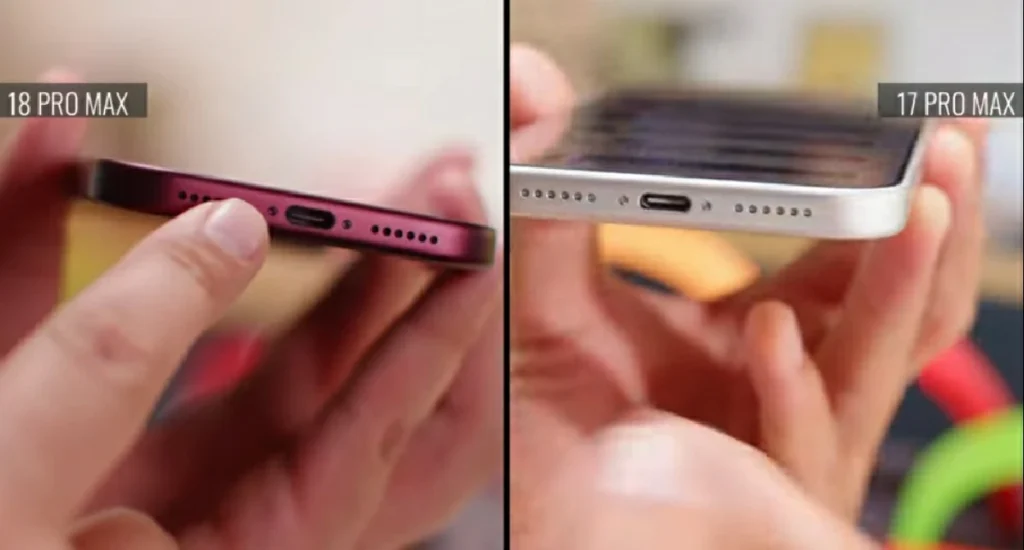
Both smartphones feature stereo speakers, providing a more immersive audio experience than a single bottom-firing speaker.
You can use them for watching videos, playing games, listening to music and making other audio-related activities more enjoyable without necessarily connecting external speakers.
However, the iPhone 18 Pro Max offers a slight improvement in speaker output.
It is a little louder than the iPhone 17 Pro Max and produces somewhat stronger bass. This gives the newer model a small advantage when listening to music or watching videos directly through its built-in speakers.
The difference is not particularly substantial, but it is a welcome refinement.
Neither smartphone includes a traditional 3.5mm headphone jack, so wired headphones require a compatible USB-C connection or adapter.
Connectivity and Additional Features
Both the iPhone 18 Pro Max and iPhone 17 Pro Max offer extensive connectivity options expected from premium Apple smartphones.
They support 5G networks alongside 4G LTE, 3G and 2G connectivity. However, the supported network bands vary depending on the regional model, so you should check the exact version before purchasing if network compatibility is important.
For wireless connectivity, both devices support Wi-Fi 7 and Bluetooth 6.0.
They also include NFC for compatible contactless functions, GPS and other satellite navigation systems, including GLONASS, Galileo, BeiDou, QZSS and NavIC.
Both smartphones feature a USB Type-C 3.2 Gen 2 port with DisplayPort support, allowing compatible external display connections.
Other shared features include second-generation Ultra Wideband support, Face ID, an accelerometer, gyroscope, proximity sensor, compass and barometer.
Apple also provides Emergency SOS, Messages and Find My connectivity through satellite support on both devices, where the relevant services are available.
Overall, there are no major connectivity differences between these two smartphones.
SIM Card Support
Both smartphones offer different SIM configurations depending on the market.
The international iPhone 18 Pro Max supports one physical nano-SIM alongside eSIM functionality, with support for multiple stored eSIM profiles and up to two active connections at a time.
The US version is eSIM-only and supports multiple stored eSIM profiles, with up to two active simultaneously.
The Chinese version supports two physical nano-SIM cards alongside eSIM functionality, although no more than two connections can be active simultaneously.
The iPhone 17 Pro Max also offers regional SIM variations. International versions support a physical nano-SIM alongside eSIM, while the US version is eSIM-only.
The Chinese version supports dual physical nano-SIM cards.
Therefore, if you prefer using physical SIM cards, pay attention to the regional variant before purchasing either smartphone. This is particularly important if you are buying an imported iPhone.
Pricing and Availability
The Apple iPhone 18 Pro Max has a launch price of over $1,500, positioning it firmly in the premium flagship category.
The iPhone 17 Pro Max, being the older model, is available at a considerably lower price, with its price now starting at over $850.
This creates an important difference in value.
Although the iPhone 18 Pro Max offers a more powerful processor, better battery endurance, faster wired charging and a few additional camera features, the iPhone 17 Pro Max still provides a very similar overall experience.
If you are considering upgrading from an older iPhone or purchasing your first Pro Max model, the lower price of the iPhone 17 Pro Max makes it particularly attractive.
However, if you want Apple’s newest hardware and are willing to spend more for the additional improvements, the iPhone 18 Pro Max remains the more advanced option.
Apple iPhone 18 Pro Max vs iPhone 17 Pro Max: Key Differences
The following table highlights the most important differences between the two smartphones.
| Feature | iPhone 18 Pro Max | iPhone 17 Pro Max |
|---|---|---|
| Display | 6.9-inch LTPO OLED | 6.9-inch LTPO OLED |
| Resolution | 1320 x 2868 pixels | 1320 x 2868 pixels |
| Refresh rate | 120Hz | 120Hz |
| Display cutout | Smaller cutout | Larger cutout |
| Processor | Apple A20 Pro (2nm) | Apple A19 Pro (3nm) |
| CPU | Hexa-core, up to 4.93GHz | Hexa-core, up to 4.26GHz |
| GPU | 7-core Apple GPU | 6-core Apple GPU |
| RAM | 12GB | 12GB |
| Main camera | 48MP, variable aperture | 48MP, fixed aperture |
| Main camera aperture | f/1.5-f/4.0 | f/1.8 |
| Telephoto | 48MP, 4x optical zoom | 48MP, 4x optical zoom |
| Ultrawide | 48MP | 48MP |
| Front camera | 18MP | 18MP |
| Nano-SIM battery | 5,391mAh | 4,823mAh |
| eSIM-only battery | 5,567mAh | 5,088mAh |
| Wired charging | Up to 54W | Up to 42W |
| Wireless charging | 25W | 25W |
| Weight | 249g | 233g |
| Operating system | iOS 27 | iOS 27 (updated) |
| Water resistance | IP68, up to 6m | IP68, up to 6m |
| Starting storage | 256GB | 256GB |
| Maximum storage | 2TB | 2TB |
| Price | Over $1,500 | Over $850 |
Final Verdict: Is the iPhone 18 Pro Max Worth Upgrading To?
The Apple iPhone 18 Pro Max is the better smartphone overall, but the difference between it and the iPhone 17 Pro Max is not as significant as you might expect from a full generational upgrade.
Apple has improved several important areas, particularly processing power, battery capacity and wired charging speed. The newer A20 Pro chipset provides considerably more performance, while the larger battery delivers better endurance. You also get a smaller display cutout, slightly improved stereo speakers and additional manual camera controls.
However, several important features remain practically unchanged.
Both smartphones have the same 6.9-inch OLED display specifications, the same 120Hz refresh rate, similar brightness levels and anti-reflective protection. Their telephoto and ultrawide cameras are also essentially identical, while the selfie cameras and video recording capabilities remain largely unchanged.
Even the main camera improvement on the iPhone 18 Pro Max does not translate into a substantial difference in everyday photography. Its brighter variable-aperture lens and additional manual controls are useful additions, but the iPhone 17 Pro Max continues to produce excellent photographs.
If you already own the iPhone 17 Pro Max, I would not consider the iPhone 18 Pro Max an essential upgrade. Your current phone is still powerful, has excellent cameras, offers impressive battery life and provides virtually the same software experience. Unless you specifically need the additional processing power, faster charging or improved battery endurance, keeping your existing device makes more financial sense.
However, if you are purchasing a new smartphone and have the budget for either model, the iPhone 18 Pro Max is the more complete option. It gives you Apple’s latest processor, a larger battery, faster wired charging and the additional camera flexibility.
Nevertheless, the iPhone 17 Pro Max is arguably the more attractive value proposition because it delivers much of the same flagship experience at a considerably lower price.
Ultimately, the iPhone 18 Pro Max is the superior device, but the iPhone 17 Pro Max remains an excellent alternative. If you value having the newest technology and want the best Apple currently offers in this category, go for the iPhone 18 Pro Max. But if you would rather save a substantial amount of money without sacrificing much of the overall experience, the iPhone 17 Pro Max is still a very smart choice.